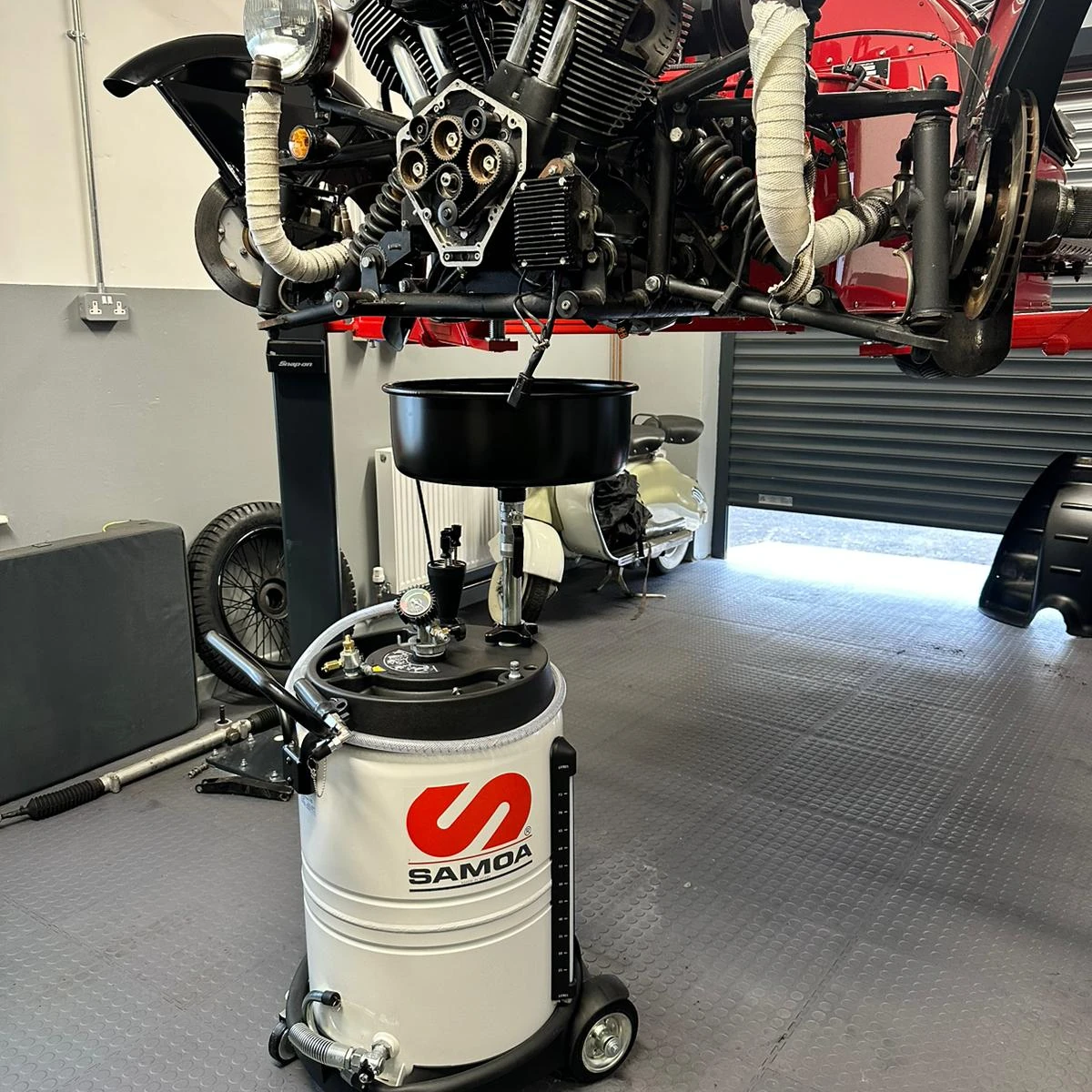




The core of a Morgan 3-Wheeler is genuinely tough. The tubular chassis and the fundamentals of the S&S V-twin’s bottom end routinely cover tens of thousands of miles without drama. The reliability conversation isn’t really about whether the car is well built. It’s about a short, specific list of components that take the brunt of a very unusual engineering brief: mounting a massive V-twin into a lightweight three-wheeled road car.
That combination creates real, cyclic stress on a handful of parts. Below is what they are, what they sound and feel like when they start to go, and roughly when in a car’s life they tend to show up. We’ve seen this same pattern often enough that it’s no longer really a mystery, it’s just what an M3W does over time if nobody’s looking for it.
1. Fuel Pump
The stock fuel pump on the 5 Speeder M3W is a Chinese-made Land Rover part, and is known to be unreliable at best from its direct brush motor design.
What it sounds like: it doesn’t. The first sign of failure is that you don’t hear it when you turn on the ignition, which primes the fuel system.
Why it happens: a cheap, mass-produced brush motor. It needs to be replaced by a USA-made gear-driven Walbro alternative.
2. The Bevel Box
The bevel box takes drive from the gearbox and turns it 90 degrees to the belt-driven rear wheel. It’s also the single most common source of unwanted noise on an M3W, so much so that most owners hear it before they know what it is.
What it sounds like: a piercing, high-pitched whine or howl that rises in direct proportion to road speed rather than engine revs, quite distinct from ordinary road and wind noise.
Why it happens: the gear set itself, made by Quaife, is fundamentally solid, although some have tried to re-lap and modify the gear mechanism to reduce noise and improve performance. To be honest, it’s potluck whether you get a noisy one or a quiet one. Proper lubrication, mounting and belt tension all play a part in overall noise and performance. Morgan added an NVH Mounting Kit in 2014 to try and reduce noise, but that introduced other issues so was of limited overall success.
3. Engine Mounts
The V-twin’s heavy torque pulses ask a lot of whatever is holding it to the chassis, and it shows.
What it feels like: pronounced shaking through the dash and steering column at idle. In severe cases you can actually see the engine shift relative to the chassis under load.
Why it happens: the engine is mounted on four points with opposed cylindrical rubber bushes that offer very little movement, transferring vibrations to the chassis. Although the rubber mounts absorb some of the vibration, the majority just shakes everything else, from chassis to bodywork to wing mirrors.
4. Drivetrain
A V-twin’s firing pulses would shatter a normal gearbox input shaft without something absorbing the spikes first, and that’s the compensator’s job.
What it sounds like: a rhythmic clattering or rattling from the bellhousing at idle or low revs, often described by owners as “marbles in a tin can,” plus a jerky, snatching feel at low speed.
Why it happens: early pre-2014 units used a spring-loaded design borrowed from Harley-Davidson and could fail within 3,000 miles; the later Centa buffer design is considerably more robust and typically lasts 10,000 to 15,000 miles before it needs attention. The rubber elements inside the compensator are a genuine wear item, not a fault. They harden and shred under relentless thermal cycling and compression. Treat a roller change as a scheduled consumable rather than a surprise repair. As the engine needs to come out to replace the rollers, investing in an ‘Easy Roller Change’ upgrade to your Centa drive will dramatically reduce future maintenance costs.
5. Charging & Starting
Cranking a big-bore, high-compression V-twin draws serious current, and the charging components live in a hot, exposed spot by design. With only a lawnmower-sized battery, it is important to have a good charging system.
What it looks like: slow or laboured cranking, a battery that won’t hold charge after short drives, or a voltage gauge showing less than 14V when the engine is running.
Why it happens: the factory regulator, the CE601 series specifically, is affected by both engine heat and vibration depending on where it is mounted. Solid-state electronics don’t like sustained heat, and a cooking rectifier eventually either opens (no charge at all) or shorts (cooks the battery with unregulated voltage).
6. The Valvetrain
The bottom end of the X-Wedge is tough and routinely exceeds 50,000 miles without issue. The valvetrain up top is the more delicate area, and can fail in a variety of ways given the quantity of moving parts.
What it sounds like: a sharp, rapid metallic ticking from the top of the engine that, unlike normal pushrod noise, doesn’t quieten down once the engine is fully warm. Issues starting the car and poor performance are also common signs.
Why it happens: all these small items are working thousands of times per minute and are much smaller in size than the lower end components. Being smaller and lighter in design means they wear and fatigue faster. The most common failures are snapped valve springs, or slightly worn rocker arms that require adjustment.
7. Rear Sprocket
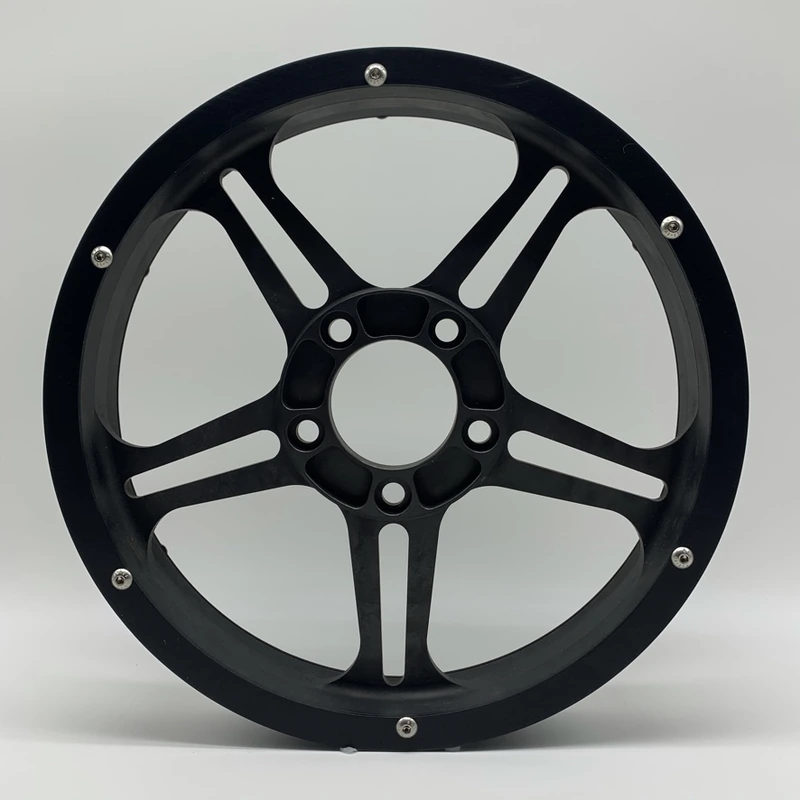
Early 5 Speeder M3Ws were fitted with an aluminium rear sprocket, which wears over a short time due to belt tension and abrasive road detritus between belt and sprocket. Later M3Ws were fitted with a steel sprocket, which eliminates the wear issue at the cost of increased weight. We offer an aftermarket lightweight steel sprocket that gives you the best of both worlds.
What it sounds like: typically a loud clunk as you pull away, when the belt jumps a tooth on the sprocket.
Why it happens: as the aluminium wears it reduces the contact and location between the Kevlar belt (which never wears out) and the sprocket teeth, slackening the belt. Each time the belt is re-adjusted, the teeth on the sprocket change profile to more of a point as they wear.
A higher-mileage M3W with documented proof of key upgrades is widely considered a safer buy than a low-mileage “garage queen” still on original components.
Summary: What to Watch For
| Component | Typical Onset | Main Symptom |
|---|---|---|
| Fuel pump | Unpredictable | Silent on ignition, no prime |
| Bevel box | Life | Rising whine with road speed |
| Engine mounts | As and when | Idle shake, throttle-on/off clunk |
| Drivetrain compensator | 10,000–15,000 miles | Rattling at idle, low-speed jerkiness, loss of drive |
| Charging system | Unpredictable | Slow cranking, flat battery |
| Valvetrain | 5,000–25,000 miles | Sharp ticking that doesn’t warm away |
| Rear sprocket | Aluminium wears early | Clunk pulling away as belt jumps a tooth |
None of this makes the M3W unreliable. It makes it predictable, which in an old-school way is actually better: you know what to check, and roughly when to check it. Every item on this list is well understood, well documented, and addressable with the right upgrades and inspection schedule. See our upgrades guide for the engineered fixes to each, or our servicing guide for how we build these checks into routine maintenance.