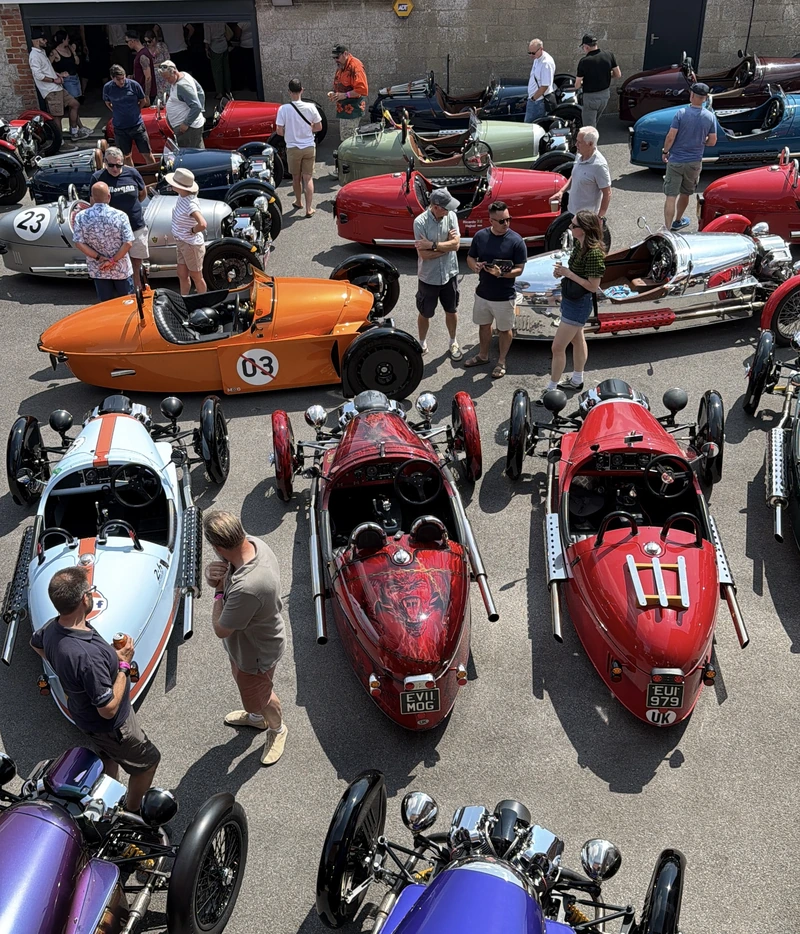


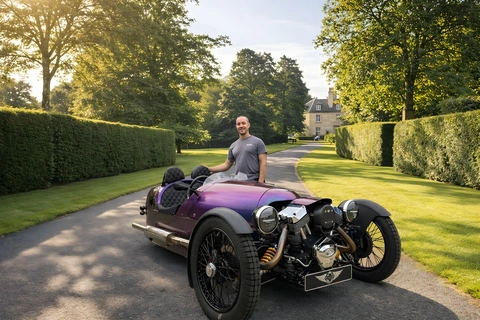
When Morgan replaced the original 3-Wheeler with the Super 3 in 2022, it wasn’t a facelift. It was a near-total re-engineering. The classic S&S-powered car, often called the “5 Speeder,” and the modern Super 3 share a layout and a spirit, but almost no actual components. We service both day to day, so here’s the honest comparison, not a marketing one, drawing on what we actually see on both cars in the workshop.
Spec Comparison
| Spec | M3W (2012–2021) | Super 3 (2022–) |
|---|---|---|
| Engine | S&S X-Wedge, 56° V-twin | Ford Dragon, inline 3-cylinder |
| Cooling | Air-cooled | Liquid-cooled |
| Displacement | 1,983cc | 1,432–1,497cc |
| Power | 82 bhp | 118 bhp |
| Torque | 140 Nm | 150 Nm |
| Gearbox | Mazda 5-speed | Mazda 5-speed |
| Chassis | Steel spaceframe + ash wood body support frame | Bonded aluminium monocoque |
| Dry weight | 525kg | 635kg |
| 0–62mph | 6.0 seconds | ~7.0 seconds |
| Top speed | 115mph | 130mph |
The Engine & Drivetrain
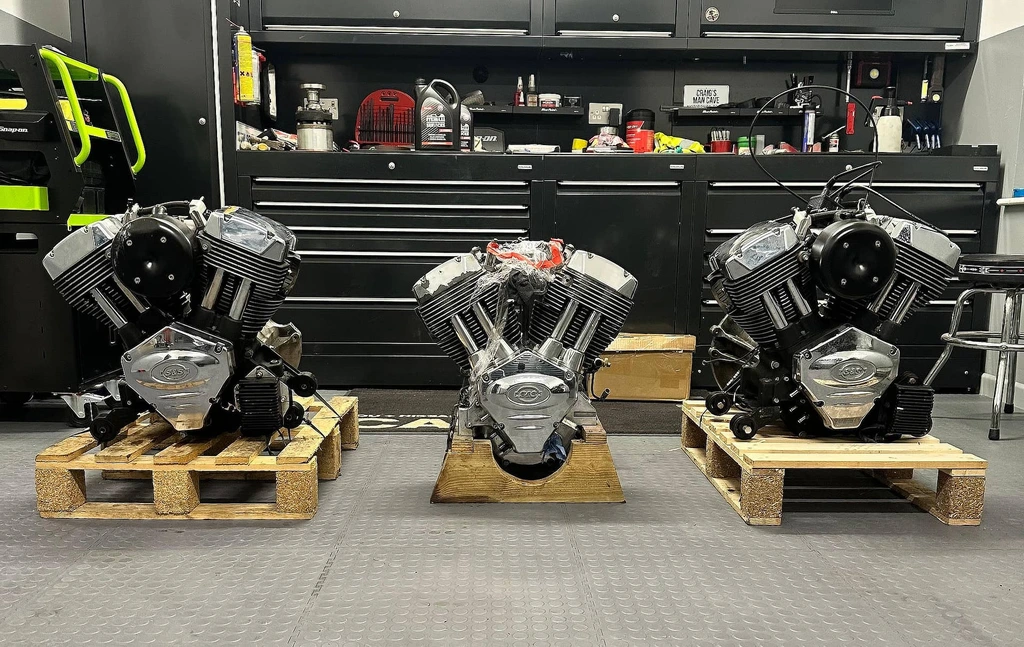
The classic car’s external S&S V-twin delivers heavy, unevenly spaced power strokes straight into the compensator and then the transmission. That’s the source of both its character and its known wear points, which we cover fully in our reliability guide and engine explainer. The Super 3’s inboard Ford triple has a smoother firing order and genuinely automotive-grade internals, which meaningfully reduces the drivetrain stress that drives the classic car’s maintenance needs.
The Chassis
The classic M3W wraps aluminium body panels over a steel spaceframe with an ash-wood structural skeleton, a construction method with genuine heritage but real long-term wood and corrosion upkeep to think about as the car ages. The Super 3 replaces all of that with a bonded aluminium monocoque, improving rigidity, weather resistance and packaging at the cost of roughly 110kg extra weight. It also manages airflow very differently: flat aluminium “sideblades” route air into dual side-mounted radiators, a job the classic car’s exposed engine simply doesn’t need to do, since it relies entirely on the airflow around it rather than ducted cooling.
Cabin
The 5 Speeder M3W pays homage to the original Morgan 3-Wheelers in a way that the Super 3 doesn’t. Although narrower inside due to the transmission tunnel, it feels lower and sportier in every way. The Super 3’s cabin is noticeably wider and more modern in its design. The Super 3 instrumentation is electronic, the 5 Speeder more analogue. The Super 3 has an adjustable pedal box, which may appeal to owners who swap drivers on a regular basis. Changes in regulations mean that you sit much higher in the later Super 3 than in the 5 Speeder, giving it less of a low-rider sporty feel and more the feel of a regular car.
Given the lower seating in the 5 Speeder, it offers more screen protection to a normal height driver, with a clear field of view from its simple yet effective screens. It is possible, though not advisable, to drive the 5 Speeder without protective eyewear or headgear. The Super 3’s wind deflectors actually restrict vision and offer minimal protection against the elements, making eyewear or a helmet essential wear.
Interior storage is better on the Super 3, especially if fitted with the optional extras. Getting in and out of a 5 Speeder is easier than a Super 3, given the side height and seat configuration.
Sound and Sensation
Spec sheets don’t capture the biggest difference between these two cars, which is that they feel nothing alike from the seat. The classic M3W puts a massive, exposed V-twin inches from you, and you feel every one of its uneven power strokes through the pedals and the wheel as much as you hear them. It’s genuinely visceral in a way very few road cars manage, and it’s the reason people who’ve never driven one assume it will be uncomfortable, then get out grinning anyway. The Super 3’s three-cylinder engine, tucked inboard and liquid-cooled, is a calmer, smoother experience by comparison. Quicker in a straight line, easier to live with, but it trades away some of that raw mechanical drama for outright competence.
Ownership Feel
This is where the two cars really diverge. The classic M3W is raw, mechanical theatre: loud, vibrating, and honestly best suited to an owner with real mechanical sympathy and patience for maintenance. The Super 3 keeps the open-air silliness but wraps it in a wider, smoother, more usable daily character. Neither is the objectively “better” car. They suit different priorities, and most owners we talk to already know which one they are before they purchase. If you’re still undecided, ask yourself honestly whether you want a car that demands attention and rewards it, or one you can simply get in and drive without thinking about it a lot.
In short, they are very different cars that only share the maker’s name badge and the commonality of three wheels. I could never personally own one over the other, and would have to have both to use. Both are very capable of daily driving and long-distance touring if well maintained, as proven by the enthusiastic community of owners. Both are very different in character, and yet both offer more smiles for miles than most other vehicles on the road.
Servicing & Warranty
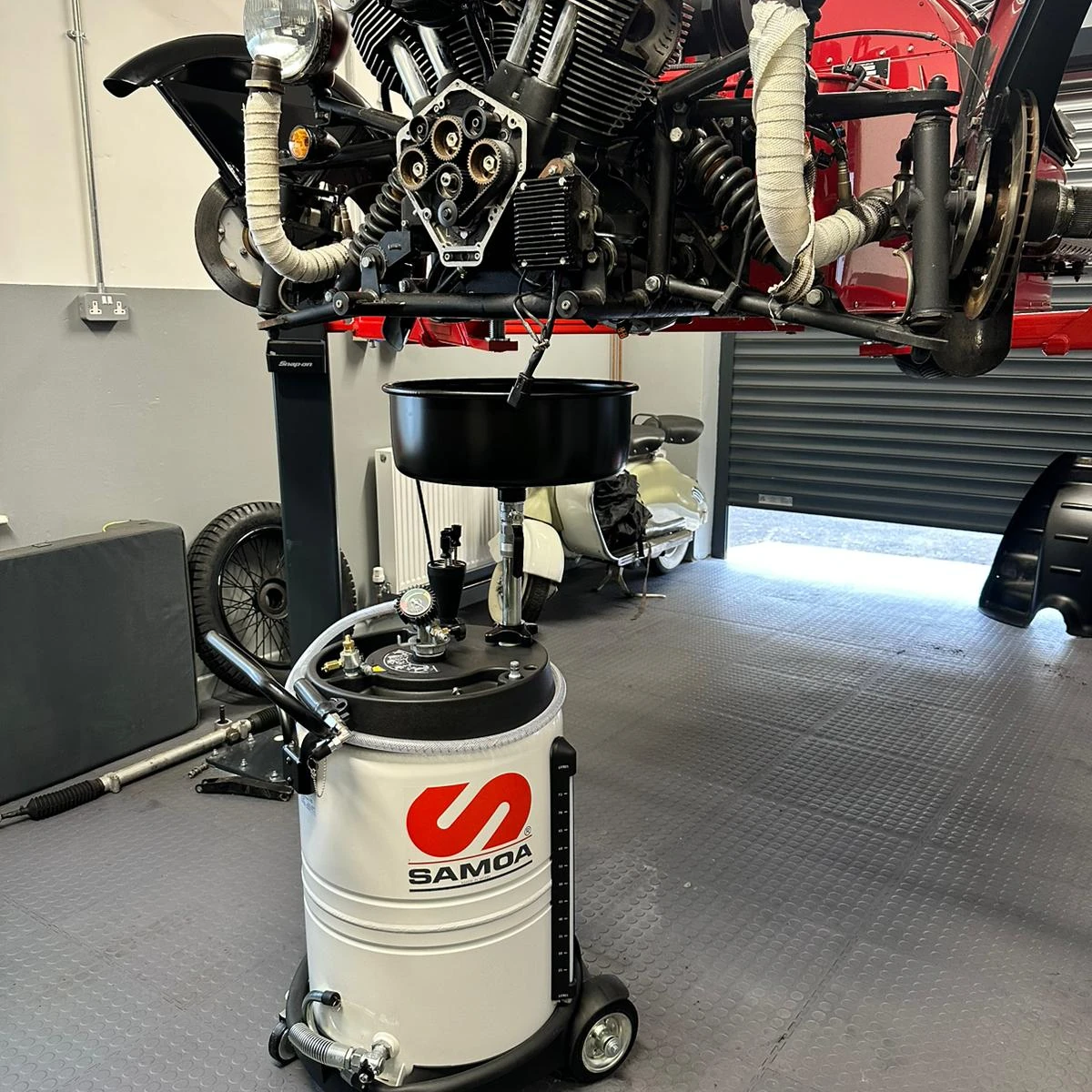
The classic car’s intensive maintenance profile is well documented in our servicing guide: proactive inspection of known hotspots, frequent oil changes, and structural nut-and-bolt checks. The Super 3’s conventional Ford powertrain behaves much more like a normal low-volume sports car, with longer service intervals and far less drivetrain-specific inspection required. New UK cars also carried a 30-month, 30,000-mile factory warranty, which matters if you’re buying nearly new and want that cover to carry over. We’re fully equipped for servicing and upgrading both, including MOT testing. Parts availability for the 5 Speeder is more challenging than for the more recent Super 3, but we find solutions for most issues through Morgan’s own network or independent specialists like us.
What Do They Cost?
New, the 5 Speeder M3W launched around £25,000 to £30,000 plus VAT, with late bespoke editions reaching £45,000 to £50,000 or more. Interestingly, the Euro 3 spec cars offered more horsepower than the Euro 4 cars, which is worth knowing if you’re cross-shopping. The Super 3 launched from roughly £40,000, with typical builds pricing out between £48,000 and £55,000-plus once you factor in the paint, luggage and accessory options most buyers end up choosing. On the used market, the 5 Speeder typically trades from around £26,000 to £45,000 or more and the Super 3 from roughly £36,000 to £48,000-plus, with condition, history, upgrades and rarity moving the number more than age alone. Neither car depreciates the way a typical modern car does, which is part of why so many owners treat the purchase as much as an investment as a toy. See our buying guide for what to check either way before you commit.
Choose the classic M3W if you want an uncompromising, visceral hot rod and don’t mind proactive maintenance in exchange for genuine mechanical spectacle. Choose the Super 3 if you want the open-air experience with modern reliability and easier day-to-day ownership.